
The second coat is the one people talk themselves out of. The first coat already looks like a painted house, the weather is holding, and skipping it saves a day and a few gallons. Then the color starts looking thin and patchy on the south wall, the old color ghosts through, and the house needs repainting years earlier than it should have.
The short answer: plan on two coats. Benjamin Moore’s own exterior guidance tells homeowners to be prepared to apply two coats of premium exterior paint. One coat is enough in a few specific situations, and some jobs need three. What decides it is the color change, the surface, and the paint itself.
Why two coats is the standard
Paint is designed to perform at a certain thickness. The spreading rate printed on the can, the square footage a gallon covers, is what gets you there. One pass leaves a film thinner than the paint was built to be, and thin film is where color looks uneven and weathering starts early.
Two coats also fixes the things nobody can see while the first one is going on. The first coat seals the surface and shows you every spot you missed, every thin patch over a repair, every place the old color is still showing. The second coat goes on over a uniform, sealed surface, which is why it looks even in a way a single heavy coat never does.
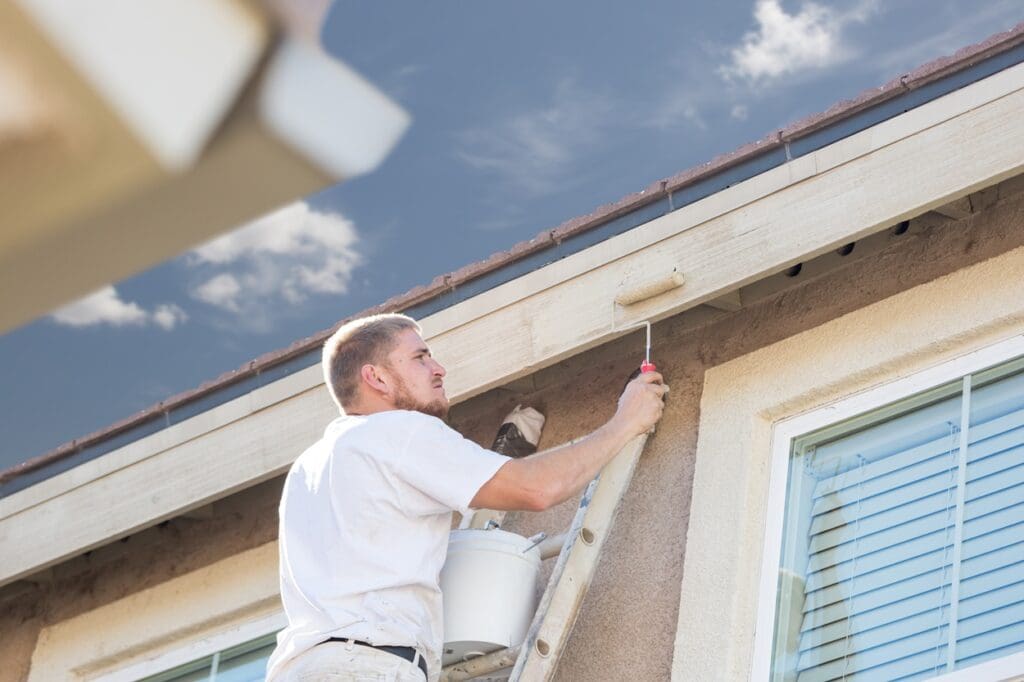
When one coat is genuinely enough
One coat can be the right call when all of these are true:
- You’re repainting the same color. Nothing has to be hidden, so coverage isn’t doing any work.
- The existing paint is sound. No peeling, chalking or bare patches, just dirt and fading.
- The surface is smooth and non-porous. Vinyl or aluminum siding takes paint far more evenly than rough cedar or stucco.
- You need it done fast. A house going on the market next month is a different decision from one you plan to keep for fifteen years.
Be honest about the tradeoff. A single coat uses less paint and less labor, and it will look good the day the job ends. It’s a thinner film than the same paint applied twice, so it’s protecting the house for fewer years.
When you need a third coat
A third coat usually comes down to color or texture:
- A big color change. Going light over dark is the classic case. Deep reds, blues and dark grays are also harder to cover, because of how those pigments work.
- Porous or rough surfaces. Stucco, rough-sawn cedar and older weathered wood drink the first coat, and it can look blotchy no matter how carefully it’s applied.
- Patchy repairs. A wall with filler, new boards or bare spots can show through two coats even when the color hasn’t changed.
It’s worth settling this before anyone buys paint, because it changes how much paint the job needs.
Atkinson, NH
Not sure whether your house needs two coats or three?
We can look at the siding and the color you want, and tell you what it will actually take.
Primer is not one of your coats
Primer and paint do different jobs. Primer bonds to the surface and gives the paint something uniform to sit on. It isn’t a finish coat, and counting it as one is how a house ends up with a single coat of actual paint on it.
You don’t always need to prime the whole house. Benjamin Moore’s guidance is to spot prime the areas “that are not in sound condition”, which on most repaints means bare wood where paint has failed, exposed repairs, rust spots on metal, and anywhere that’s been scraped back to bare wood. Bare wood, new siding and heavy stains are the cases that call for full priming.
If you’re changing color dramatically, ask for the primer to be tinted toward the new color. It does more for coverage than an extra finish coat.
Sprayed or rolled changes what a coat is
“Two coats” describes how many passes the surface gets, not how much paint ends up on it. A sprayer lays down a heavier, more even film in one pass than a roller does, which is why a sprayed coat and a rolled coat aren’t equivalent. It’s also why good crews back-roll or back-brush after spraying, working the wet paint into the surface instead of leaving it sitting on top.
Texture matters here too. Rough siding has far more surface area than it looks like from the driveway, and it takes more paint to cover the same square footage. If you’re weighing methods, spraying and rolling each have their place depending on the surface and the conditions.
Want a straight answer on what your siding needs? Give us a call.
What “two coats” should mean on a quote
Two painters can both write “two coats” and mean different things. These questions sort it out:
- Two coats of what? The specific product and line, not just the brand. Coverage varies between a premium line and a builder-grade one.
- Sprayed, rolled, or sprayed and back-rolled? It changes how much paint the wall actually receives.
- Is primer included, and where? Full prime, spot prime, or none, and whether it’s tinted.
- What happens if the color doesn’t cover? Ask whether a third coat is included, before anyone opens a can.
- How much prep is in the number? Scraping, sanding and washing decide whether those two coats stay on.
A painter who answers those clearly is telling you how they work. Vague answers on the same questions are worth more attention than the number at the bottom of the page.
Why the New Hampshire calendar decides your second coat
Around here the second coat is often a scheduling problem rather than a painting one. Recoat times stretch out as the weather cools, and the temperature and dew point have to hold through the night after each coat, not just while the paint goes on.
That’s why late-season jobs get planned around a run of mild days instead of a single good afternoon, and why a house that only gets one coat in October is usually a scheduling casualty. If the window is closing, a smaller section finished properly beats a whole house with one thin coat on it.
Most houses want two coats, a few want three, and a handful genuinely only need one. The decision comes from the color change, the surface and the condition of what’s already there, which is the first thing to look at before anyone buys paint. If you’d rather not make that call yourself, we can look at the siding and the color you’re considering before any exterior painting starts.