
Common Fence Staining Mistakes That Cause Rot and Warping
A stained fence can look great and help protect the wood from moisture, sunlight, and everyday weather exposure. But staining isn’t as simple as picking a color and brushing it on. The wrong preparation, timing, or product can trap moisture in the wood and contribute to problems like rot, warping, peeling, and uneven fading. Here’s what to avoid if you want your fence stain to protect the wood instead of contributing to its deterioration.
1. Staining Wood Before It Has Dried Properly
One of the biggest mistakes is staining a fence when the wood is still too wet. New or recently washed wood can hold a surprising amount of moisture. Applying stain before the surface has dried adequately can prevent the product from penetrating properly.
That can result in an uneven finish and inadequate protection. This is particularly important after pressure washing. A fence may look dry on the outside while still retaining moisture deeper in the wood. Give the wood enough time to dry, depending on the weather, the wood’s condition, and the product manufacturer’s requirements.
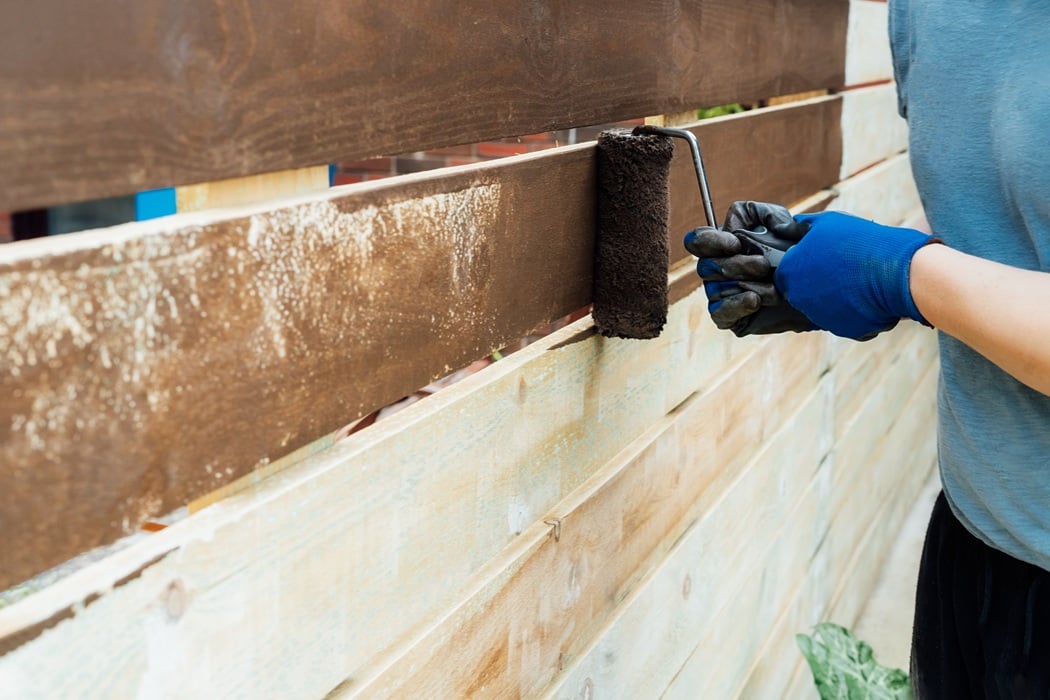
2. Staining a Fence Without Cleaning It First
A fence may not look particularly dirty until you get close to it. Over time, wood fencing collects:
- Dirt and dust
- Mold and mildew
- Algae
- Pollen
- Grime
- Old stain residue
Applying new stain over these contaminants prevents consistent penetration and can leave you with a blotchy finish. More importantly, organic growth can hold moisture against the wood. Leaving it in place doesn’t do the fence any favors. Proper cleaning is an important part of preparing to stain a fence.
3. Skipping Damaged or Rotting Boards
Stain can refresh the appearance of weathered wood, but it can’t repair wood that’s already deteriorating. Before staining, inspect the fence for soft, cracked, split, or rotting boards. Pay particular attention to areas close to the ground, where wood is more likely to encounter persistent moisture.
If a board has significant rot, staining over it won’t stop the deterioration. Damaged sections may need to be repaired or replaced before the rest of the fence is treated.
4. Applying Stain Too Thickly
More stain doesn’t necessarily mean more protection. Applying an excessively thick coat can prevent the product from penetrating as intended and may leave excess material sitting on the surface. Depending on the product, this can contribute to an uneven appearance, slow drying, or premature failure.
Follow the manufacturer’s application instructions rather than trying to create the thickest possible coating. A properly applied coat matters more than using more product.
5. Choosing the Wrong Stain for the Fence
Not every stain suits every fence. Wood species, age, previous coatings, exposure, and the desired appearance all matter. For example, a heavily weathered fence may require different preparation and product selection than a newer cedar fence.
You also need to consider whether you want a transparent, semi-transparent, or more opaque finish. The right product should match both the wood’s condition and the level of protection you’re trying to achieve.
6. Staining in Direct, Intense Sunlight
A beautiful sunny day might seem like the perfect time to stain, but not always. Direct sunlight can cause the stain to dry too quickly on the surface before it has time to penetrate evenly. That can lead to lap marks, uneven color, and an inconsistent finish.
The fence temperature matters too. A surface sitting in direct summer sun can become considerably hotter than the surrounding air. Following the product’s recommended application conditions and choosing an appropriate time of day can make a noticeable difference.
7. Ignoring the Weather Forecast
Rain shortly after application can interfere with the stain before it has adequately dried or cured. Humidity can also affect drying time, and in New Hampshire, weather can change quickly.
Before staining, check the forecast and allow enough time for the product to dry, per the instructions. Avoid treating the project as something you can squeeze in between two weather events.
8. Staining Only the Parts You Can See
A common shortcut is staining the front-facing side and ignoring everything else. But moisture doesn’t care which side of the fence you painted. Where practical and appropriate for the fence design, treat exposed surfaces, edges, and vulnerable areas.
Pay particular attention to end grain and areas where water can collect. A fence needs protection where moisture actually reaches it, not just where it’s easiest to apply stain.
9. Letting the Fence Stay in Contact With Constant Moisture
Even a perfectly stained fence can develop problems if the wood is constantly exposed to moisture. Soil, vegetation, standing water, and poor drainage can all keep fence components damp.
Trim vegetation away from the fence and avoid conditions where water stays against the wood. If the bottom of a fence is repeatedly sitting in wet soil, staining alone won’t solve the underlying problem.
10. Staining Without Considering the Fence’s Age and Condition
Older fencing often requires more preparation than newer wood. Weathered boards may have become gray, dry, rough, or unevenly absorbent. If you apply stain without addressing that condition, some sections may absorb significantly more product than others.
The result can be a patchy appearance that makes the fence look worse, not better. A quick assessment of the wood before you start can help you determine how much preparation is needed.
How Often Should You Restain a Fence?
There’s no single schedule that works for every fence.
The ideal timing depends on:
- Type of wood
- Stain used
- Sun exposure
- Moisture exposure
- Fence age
- Local weather
- Previous preparation
Instead of relying solely on a calendar, inspect the fence regularly. If the color has significantly faded, the wood looks dry, or water no longer beads on the surface as it once did, it may be time to consider another application.
Should You Stain or Paint Your Fence?
Stain is often preferred when you want to preserve the wood’s natural appearance and keep its grain visible. Paint provides a more opaque finish and gives you a much wider range of solid color options. Neither is automatically better for every fence.
The wood’s condition and type, desired appearance, maintenance expectations, and weather exposure should all factor into the decision to paint or stain your fence. If you’re unsure which approach makes sense, a professional can evaluate the fence before you commit.
Professional Fence Staining in New Hampshire
Fence staining can become a much bigger project than it first appears. Large fences require extensive preparation and consistent application. Older fencing may also need repairs before it can be stained properly. Professional painters can identify problem areas, prepare the wood, choose the right products, and apply the stain under the right conditions.
At Miles Makaroski Painting, we provide professional fence painting and staining services throughout Atkinson, Salem, and surrounding New Hampshire communities. With more than 40 years of painting experience, our team can help determine the right approach for your fence and provide a finish designed to withstand local weather conditions. Contact us at 603-489-8802 for commercial fence painting services.
FAQs
When Is the Best Time to Stain a Fence in New Hampshire?
Late spring through early fall can provide suitable conditions for many exterior staining projects, but the specific timing matters more than simply choosing a season. You want appropriate temperatures, manageable humidity, dry wood, and enough dry time after application.
Can Fence Staining Prevent Rot?
Proper staining can help protect wood from moisture and weather exposure, but it cannot guarantee that a fence will never rot. Rot generally develops when wood remains exposed to moisture for extended periods. Stain is one part of protecting the fence.
Can you stain a wet fence?
It’s generally not recommended. Wood needs to be sufficiently dry for stain to penetrate properly. Always follow the moisture and application requirements specified by the stain manufacturer.
Why is my stained fence warping?
Warping can result from moisture absorption, uneven drying, prolonged weather exposure, wood movement, or construction issues. Staining alone cannot prevent every cause of warping.
How do I know if my fence is ready to stain?
The wood should be clean, sufficiently dry, and free from loose coatings, significant organic growth, and major damage. If boards are soft or rotting, address those issues first.