
A faded or peeling commercial exterior affects how customers, tenants, and clients view your business. If you have been searching for commercial exterior painting cost in New Hampshire, you know that one estimate seems surprisingly low, another feels too expensive, and it becomes difficult to know what’s reasonable. In reality, commercial exterior painting costs can vary significantly depending on certain factors. In this article, we’ll break down what impacts pricing and what you should expect when approaching commercial exterior painting contractors.
Average Commercial Exterior Painting Costs in New Hampshire
Commercial exterior painting costs in New Hampshire typically range from $1.50 to $4.50+ per square foot, depending on the size of the building, surface condition, accessibility, and type of coating used.
For smaller commercial spaces, business owners often spend anywhere from $3,000 to $10,000, while larger office buildings, retail centers, warehouses, or multi-story properties can range from $15,000 to $50,000+.
Here’s a general breakdown:
- Small storefront or office building: $3,000–$8,000
- Medium-sized commercial property: $8,000–$20,000
- Large commercial or industrial building: $20,000–$50,000+
Buildings requiring extensive prep work, such as scraping peeling paint, repairing damaged surfaces, or applying specialty coatings, will usually fall on the higher end of the range.
What Affects Commercial Exterior Painting Costs in New Hampshire?
The cost depends on several factors, including:
- Building size and height
- Surface condition
- Type of siding or material
- Amount of prep work needed
- Accessibility
- Paint quality
- Scheduling requirements
A small office building with minimal prep will cost far less than a weathered multi-story property with peeling paint and repairs needed beforehand.
1. Building Size Has the Biggest Impact
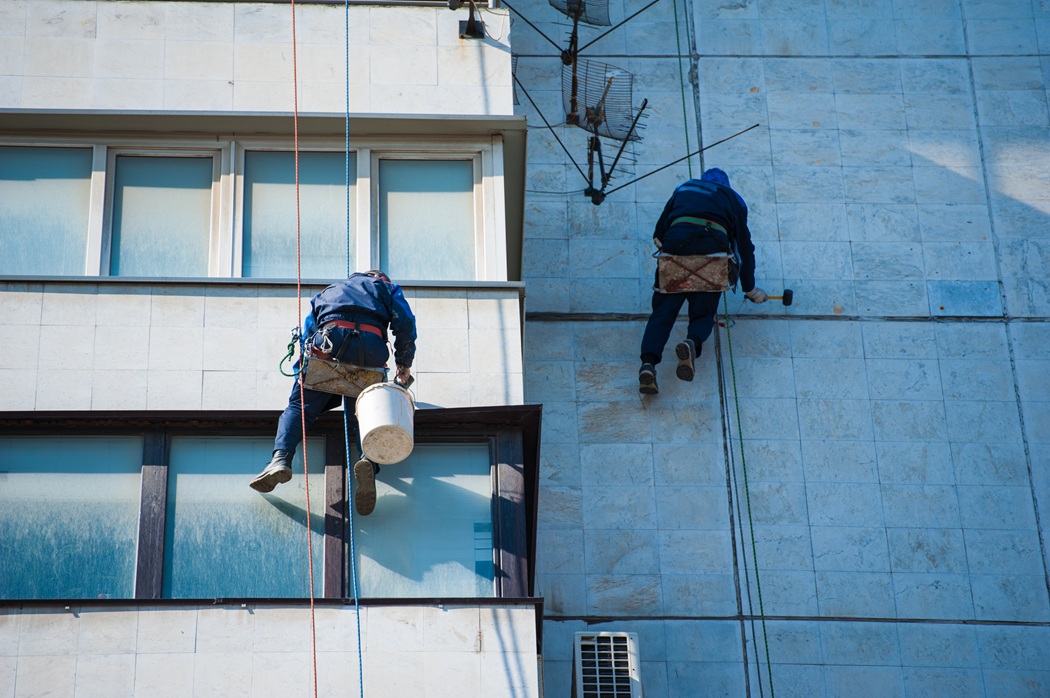
The larger the building, the higher the labor and material costs. But square footage alone doesn’t tell the whole story. A simple one-story commercial building is often much easier and faster to paint than a taller structure requiring lifts, scaffolding, or specialized safety equipment.
In places like Salem and Atkinson, many commercial buildings also feature varying architectural details, trim, or mixed materials that increase labor time.
2. Surface Preparation Can Change the Price
Prep work is another factor impacting cost. If the existing paint is peeling, chalking, or failing, additional scraping, sanding, power washing, priming, or repairs may be necessary before painting can even begin. Exterior surfaces deal with:
- Snow and ice
- Freeze-thaw cycles
- Humidity
- UV exposure
- Moisture intrusion
Skipping prep may reduce the upfront cost, but it usually significantly shortens the lifespan of the paint job.
3. Different Exterior Materials Require Different Systems
Not every commercial building is painted the same way. Wood siding, stucco, brick, metal, fiber cement, and concrete all require different coatings, primers, and preparation methods. Some materials absorb paint differently, while others need specialty products for proper adhesion.
For example:
- Metal surfaces may require rust-inhibiting primers
- Masonry may need breathable coatings
- Older wood may require extensive sealing and prep
Using the wrong system often leads to premature failure.
4. Paint Quality Affects Long-Term Value
One of the biggest misconceptions is that all paint performs the same. Lower-cost products may reduce the initial estimate, but they typically fade faster and peel sooner. Additionally, they require more maintenance and need repainting earlier.
Higher-quality commercial coatings cost more upfront but often last years longer. For many businesses, that longer lifespan creates better long-term value.
5. Weather and Timing in New Hampshire
Commercial exterior painting in New Hampshire is heavily affected by weather windows. Painting under the wrong conditions, such as extreme heat, humidity, or cold, can affect curing and durability. Because of this, many commercial projects are scheduled during peak exterior painting seasons.
That seasonal demand can affect pricing and availability. Business owners who plan earlier often have more flexibility and scheduling options.
Cheap Estimates Are Risky
If one quote comes in dramatically lower than others, there’s usually a reason. Often, lower bids cut corners through:
- Minimal prep work
- Lower-quality materials
- Reduced labor time
- Inadequate priming
- Inexperienced crews
The paint may look fine initially, but begin to fail much sooner than expected. In commercial settings, repainting early costs far more than doing the project correctly the first time.
Professional Experience is Crucial for Commercial Painting
Commercial painting projects require more planning, coordination, and durability than residential work. Miles Makaroski Painting has over 40 years of experience handling commercial properties throughout New Hampshire. We focus on:
- Thorough prep work
- Durable commercial-grade coatings
- Efficient scheduling
- Long-term performance
- Minimal disruption to business operations
A commercial exterior reflects your business and protects the property itself.
Takeaway
Commercial exterior painting costs in New Hampshire vary because each building has different materials, conditions, and challenges. While price matters, the quality of prep work, coatings, and application has a major impact on how long the results actually last.
Investing in the right system upfront often saves businesses significant maintenance and repainting costs later.
If your commercial building is starting to fade, peel, or lose curb appeal, Miles Makaroski Painting can help you plan the right solution for your property and budget. We provide professional commercial exterior painting services throughout southern New Hampshire. Call (603) 489-8802 to schedule your free consultation.
FAQs
What affects the cost of commercial exterior painting the most?
Surface preparation, building size, and material type usually have the biggest impact on pricing. Extensive repairs or difficult access can also increase costs.
How long does commercial exterior paint last?
Most commercial exterior paint jobs last between 5-10 years in New Hampshire, depending on weather exposure and product quality.
Why is prep work so important in commercial painting?
Prep work ensures proper adhesion and durability. Without cleaning, scraping, sanding, and priming, paint is much more likely to fail early.
Is commercial painting more expensive than residential painting?
Usually, yes. Commercial projects often involve larger surfaces, specialized coatings, safety requirements, and operational scheduling challenges.