
A badly painted front door tells on itself within a season. The paint on the top edge goes first. Then the lock side starts sticking in humid weather, the panel joints crack, and the door you repainted in June looks worse by October than it did before you started.
The short answer: almost all of the work is preparation. Clean the door, deal with whatever the old paint is doing, prime what needs priming, and then put on two thin coats instead of one thick one, following the order of the door’s own construction. Benjamin Moore’s exterior guidance is to be prepared to apply two coats of premium exterior paint, and a door is the last place to cut that short.
Why doors fail faster than siding
A door is the hardest-working painted surface on a house. It takes direct sun and driving rain on one face, indoor air on the other, and it gets touched, kicked, knocked and slammed all day. It also moves: wood swells and shrinks with the seasons, and the paint film has to stretch with it.
That combination is why doors want better preparation and better paint than a wall does, and why the edges matter so much. The top and bottom edges are the ones that drink water. If your door is metal rather than wood, a metal or steel door needs a different approach, mostly around rust and primer.
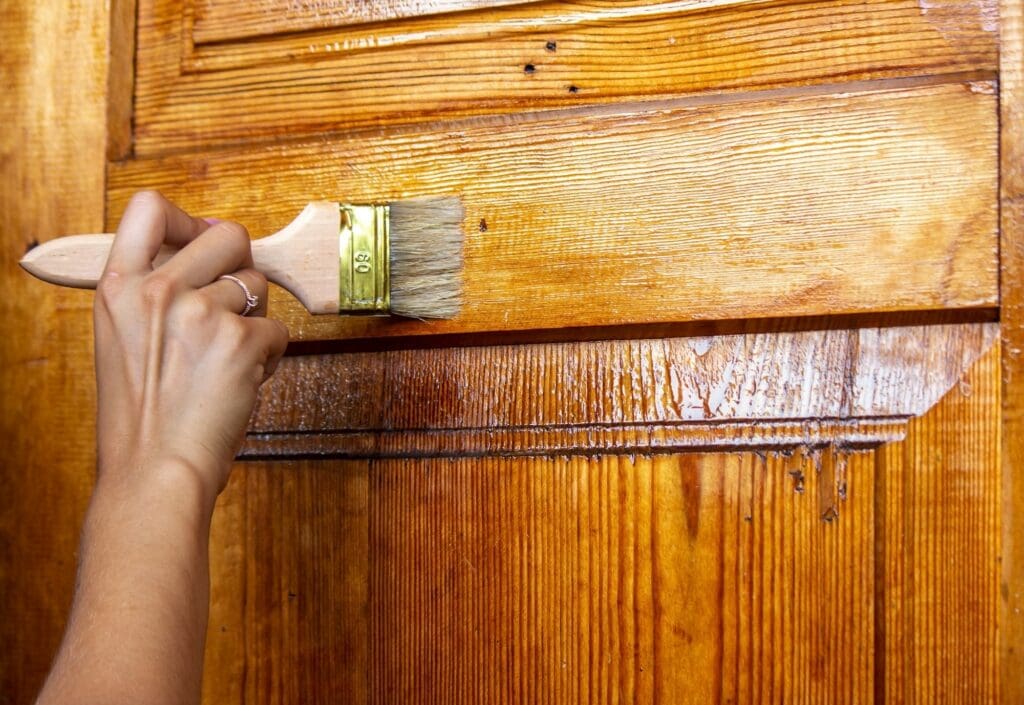
Off the hinges or hung in place
Taking the door off and laying it flat on sawhorses gives the better result. Paint levels out instead of running, you can reach the top and bottom edges properly, and there’s no drip down the face from a loaded brush.
The catch is obvious: the doorway stands open while you work, and a door that’s been painted flat needs to stay flat until the coat is firm. That rules it out for many people on a single day, especially if rain is coming or the temperature is dropping into the evening, which is where the temperature range on the label starts to decide your schedule.
Painting it hung is perfectly workable if you tape the hinges, wedge the door still, work in thin coats and accept that the bottom edge will be awkward. What you shouldn’t do is paint it hung, close it that evening, and hope.
Atkinson, NH
Front door looking tired?
We paint exterior doors, on their own or as part of a bigger exterior job.
Preparing the door
- Take the hardware off, or mask it properly. Knobs, lock plates, knockers, house numbers, mail slot. Taping around hardware is slower than removing it and never looks as clean.
- Wash it. Doors collect hand grease, pollen, cobwebs and road dust. Paint doesn’t stick to any of that.
- Deal with the old paint. Scrape anything loose or flaking, especially along the edges and around the panels.
- Sand. You’re sanding to scuff the shine off so the new paint grips, not to take the door back to bare wood. Benjamin Moore’s sandpaper guidance is to always sand with the grain, not against it, and it warns that over-sanding, especially with higher grits, can cost you adhesion. Feather the edges of any scraped patches so they don’t show through.
- Dust it off. A tack cloth or a damp rag, then let it dry.
Bare wood, sound paint, or peeling
Three different starting points, three different amounts of work:
- Sound existing paint. Clean, scuff-sand and paint. The quickest case by far.
- Bare or newly exposed wood. Sand smooth along the grain, then prime the bare areas before any topcoat. Raw wood pulls paint in unevenly, and the color ends up patchy where it did.
- Peeling or cracked paint. Take it back to a sound edge. Paint applied over paint that’s already letting go will fail exactly where the old coat does.
On grit, Benjamin Moore puts medium paper, 100 to 150, on a previously painted surface, suggests 120 or higher for smoothing minor imperfections, and keeps fine paper, 180 to 220 and up, for smoothing between coats. Coarse 40 to 80 opens up bare wood, which on a door usually means you have gone further back than you meant to.
One thing to settle before the scraper comes out: on a house built before 1978, the older layers may contain lead, and sanding or scraping is what turns that into a hazard. The EPA’s Renovation, Repair and Painting rule sets out who it applies to, and the practical precautions are the same on any door, which the metal door guide walks through.
Priming, and when you can skip it
Primer is for bare wood, repairs and surfaces that are giving you trouble. It isn’t something you brush on out of habit. Benjamin Moore’s guidance is to spot prime the areas that aren’t in sound condition, which on a typical door means the places you scraped back, any filler, and bare wood around the lock or hinges.
Two cases where it’s worth priming more than that: a big color change, where a tinted primer can save you a finish coat, and a door that’s been stripped. Otherwise, spot priming and two topcoats is the usual answer.
Want the door done properly before winter? Give us a call.
Painting it in the right order
A paneled door has a structure, and painting it in the order that structure was built keeps brush marks consistent and stops overlaps drying into ridges:
- The recessed panels first, including the molding around them.
- The horizontal rails, the pieces that run across.
- The vertical stiles, the long pieces up each side and the middle.
- The edges. The hinge edge, the lock edge, and the top and bottom. The top edge is the one everyone forgets, and it’s where water sits.
A flush door is simpler: work in sections, keep a wet edge, and finish each section into the last before it sets. Either way, thin coats. Two thin coats look better and last longer than one heavy one, which is what runs, and what stays soft underneath for weeks.
Before you close the door again
The last mistake is closing a door onto a coat that isn’t ready, which glues the paint to the weatherstripping and pulls it away the next morning. Give each coat the time the can asks for, and remember that cool, damp evenings stretch that out, which is the whole subject of how long each coat needs.
Refit the hardware only when the paint is firm, not tacky. If you have to secure the house before then, close it gently and check the next morning that it hasn’t stuck.
A front door is a small job with an outsized effect on how the house looks from the street, and it’s one of the few painting jobs where the difference between a careful afternoon and a rushed one is visible for years. If you’d rather it came with the rest of the exterior painting, it’s a natural thing to fold into a bigger job.
One Response